October 14, 2025
Conversion rate optimization (CRO) turns website visitors into leads and customers by testing layouts, refining messaging, and analyzing user behavior. Companies that apply CRO strategies increase conversions by up to 30% and shorten sales cycles compared to those relying on traffic growth alone.
In this guide, I will walk through how you can meaningfully increase traffic, generate qualified leads, and optimize conversions, and how working with a conversion rate optimization agency can accelerate your success.
Why 2026 will be the Year of CRO (Not Just Traffic)
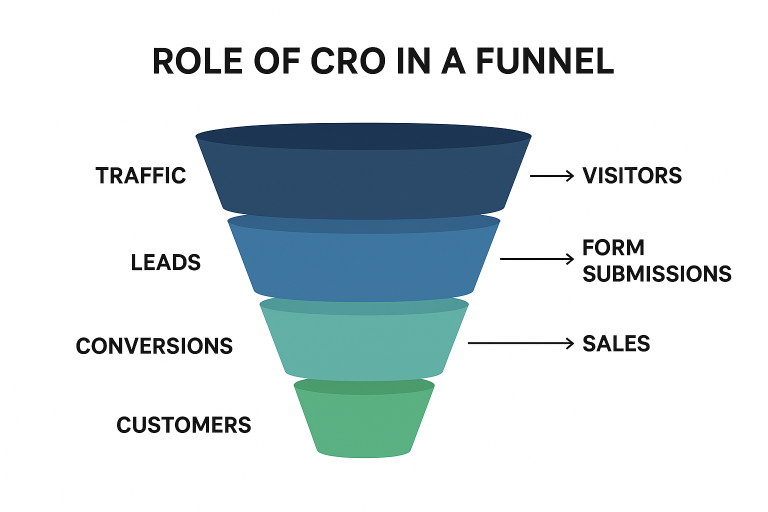
Ad costs are surging, making each click pricier
Clicks are expensive, and in many industries the cost to acquire a lead or sale has escalated sharply. The more you rely solely on scaling traffic, the higher your budget pressure becomes.
Competition is fiercer, attention is scarce
Everyone is vying for attention from content to ads to influencers, which means users are becoming more selective. It’s not enough to get a visitor; you must convince them quickly and reliably to take action.
Diminishing returns from pure acquisition
At a certain point, pouring more money into traffic acquisition yields diminishing ROI. Instead, improving how well your existing traffic converts is often the more effective approach.
CRO amplifies ROI and decreases risk
By improving conversion rates, you squeeze more value out of your existing traffic spend, reduce waste, and lower your cost per lead or sale. In short, CRO makes your funnel more efficient.
The Three Pillars of Growth: Traffic, Leads, Conversions
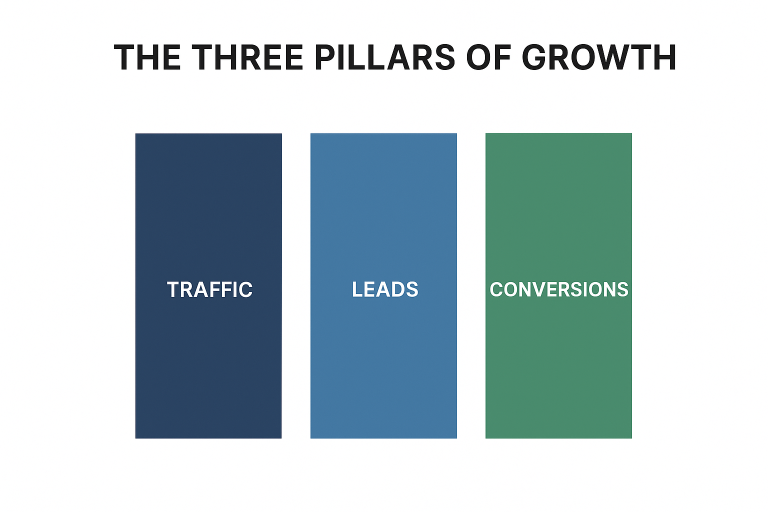
To grow sustainably in 2026, you need to synchronize three dimensions:
- Traffic: More qualified visitors.
- Leads: Capturing interest and contact information.
- Conversions: Turning leads into actions — purchases, signups, downloads.
CRO plays a central role in the third pillar, but a smart strategy ensures all three feed into one another. Let’s break down how to approach each stage.
Part I: Increasing Traffic (Quality over Volume)
Increasing traffic is always a part of the equation, but in 2026, the nuance is that traffic must be high-quality and aligned with user intent. Here are tactics to build a strong foundation:
1. SEO with intent in mind
Focus on keyword clusters and content that align with buyer intent, from awareness to decision. Use pillar pages, topic clusters, and semantic SEO. Monitor search trends and optimize for voice, video, and long-tail queries to enhance user experience.
2. Content + thought leadership
Create blog articles, guides, video series, and interactive tools that address your ideal customer’s specific pain points directly. Educational and utility content helps attract qualified visitors.
3. Paid media (with smarter targeting)
Use programmatic, contextual, and retargeting campaigns. Don’t just bid for impressions, bid for conversions. Use lookalike audiences, hyper-segmented ads, and AI bid optimizations.
4. Partnerships, guest posting & link building
Contribute guest posts, co-create content, and leverage credible platforms to drive referral traffic that’s already warmed up.
5. Social and community channels
Especially in niche verticals, building or participating in communities (such as forums, LinkedIn groups, Discord, etc.) can generate consistent and engaged traffic.
By focusing your traffic efforts on intent, relevance, and channels where your ideal audience already spends time, you establish a strong pipeline for the next stages: generating leads and driving conversions.
Part II: Generating Leads (Nurturing Interest)
Once visitors arrive, your goal should shift to capturing their interest, trust, and contact information, not forcing a purchase immediately. Here’s how to do that well:
1. Lead magnets and content offers
Offer high-value resources, such as E-books, whitepapers, audit checklists, and industry reports, in exchange for email addresses or contact information. Ensure the content is immediately useful and relevant.
2. Multi-step micro-conversions
Don’t ask for a major commitment upfront. Use smaller actions, such as quizzes, micro-surveys, email gating, or interactive tools, to draw people further into your funnel.
3. Smart website forms
Reduce friction by keeping forms concise (name and email, or minimal fields). Use progressive profiling. Use conditional logic to personalize the experience.
4. Retargeting and email capture
If someone leaves without converting, retarget them with relevant offers or encourage them to consider lighter content options to bring them back. Use exit-intent popups or scroll-based triggers, but sparingly and strategically.
5. Personalization & segmentation
Tailor lead offers by segment (e.g., industry, behavior, referral source) so each visitor sees something more relevant. This increases the chance of capturing them.
The more you can view lead generation as a nurturing process from interest to decision, the healthier your funnel will be.
Part III: Optimizing Conversions (The Heart of CRO)
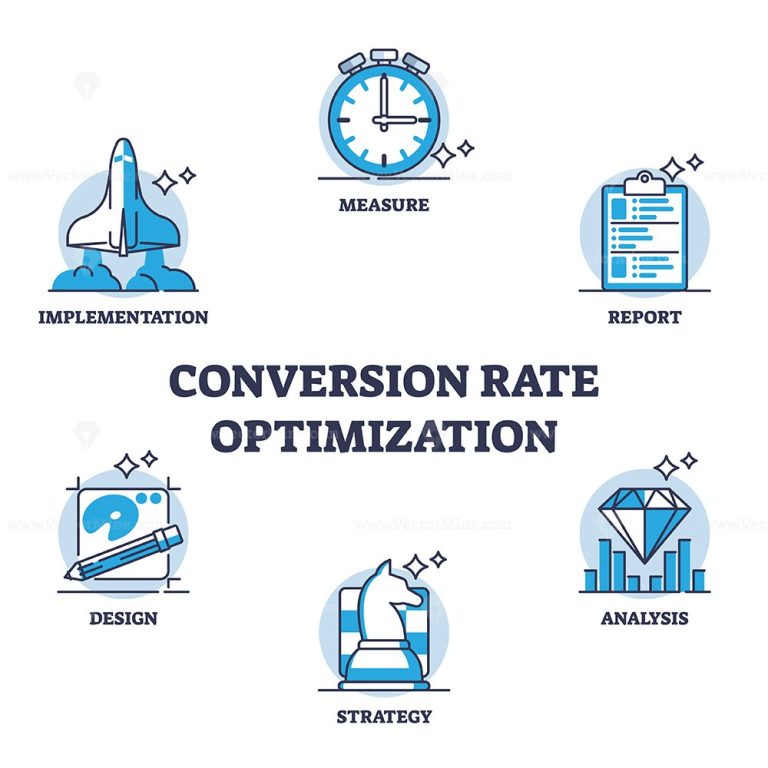
This is where conversion rate optimization services truly shine. Here’s the step-by-step playbook for converting visitors and leads into action:
1. Audit & diagnose your existing funnel
Begin with a comprehensive funnel audit, mapping each touchpoint from the landing page to the final conversion. Utilize tools such as session recordings, heatmaps, funnel analytics, and path analysis to identify drop-off points and areas of friction.
Many CRO agencies rely on tools like Hotjar, Microsoft Clarity, GA4, etc., for this insight. We at Primotech, use similar combination of tools to dig deep and analyze the data and find gaps for fixes.
2. Understand user psychology & intent
Use surveys, exit polls, interviews, and “jobs-to-be-done” frameworks to discover what hesitations, objections, or mental gaps are blocking conversions. You can’t fix what you don’t understand.
3. Set meaningful goals & metrics
Define your North Star Metric (e.g., trial signups, purchases, lead form submissions) and supporting KPIs (cart abandonment rate, drop-off rate, bounce rate). All experiments should align to move these metrics.
4. Hypothesis development
For each problem or drop-off point, craft a hypothesis. For example:
“If we shorten the checkout to one page, then more users will complete the purchase.”
These hypotheses become the basis of A/B or multivariate testing.
5. Design and run experiments
Use A/B testing or multivariate tests to compare variations. Tools like VWO, Optimizely, and Crazy Egg make this process smoother.
Run experiments for a statistically significant period before evaluating the results.
6. Analyze results & learn
Determine winners not just by vanity metrics but by impact on your goal. Even losing experiments teach you what doesn’t work, closing blind spots in your thinking.
7. Implement and scale
Roll out winning variations across relevant pages or segments. Once validated, apply similar design or messaging improvements elsewhere.
8. Iterate continuously
CRO isn’t a one-time project; it’s an ongoing process. User behavior, competitive context, and expectations are constantly evolving, so your optimization cycle must remain ongoing.
Advanced Tactics & Trends for 2026
I recently attended the Amaze SEO conference 2025, and learned a few advanced strategies that top conversion rate optimization consultants are using at a global level:
AI-driven personalization & dynamic content
AI can tailor messaging, layout, offers, and even CTAs in real time based on user behavior, demographic signals, or predictive modeling. This hyper-personalization can meaningfully lift conversion rates.
Video-first conversion strategies
Embedding short demos, product explainers, or interactive shoppable videos helps reduce cognitive friction and build trust. Video engages users more deeply than static content.
Social proof, UGC & trust signals
Reviews, ratings, testimonials, user-generated content (UGC), influencer validation, and trust badges reduce anxiety and build confidence. Strategically placing them near critical conversion points can increase conversions.
Optimized checkout & micro-optimizations
Even small changes (reducing form fields, enabling autofill, adding progress indicators, security assurances, trust seals) can have an outsized impact. The smoother the path to purchase, the fewer friction points there are.
Performance & speed optimization
Site speed is no longer optional. Every second of delay introduces a drop-off. Compress images, optimize scripts, reduce server latency, and use CDNs. Fast sites keep users engaged.
Behavior-based triggers & nudges
Use intelligent triggers, such as scroll-depth triggers, time-on-page nudges, and exit-intent overlays, but test them carefully so they don’t feel intrusive.
Micro-animations & UX delight
Small animations on buttons, input fields, or interactions (when used judiciously) can guide user focus, highlight CTAs, and make the experience feel responsive and polished.
Cross-device & cross-channel continuity
Ensure your funnel is seamless across desktop, mobile, and even app contexts. Users often shift devices mid-journey to maintain consistency, context, and saved state where possible.
When & Why You Should Partner with CRO Specialists
Building and sustaining a strong CRO practice internally is possible, but many organizations find that partnering with external expertise accelerates learning and yields better results.
Consider engaging a conversion rate optimization agency or conversion rate optimization consultant when:
- You don’t have internal bandwidth to run systematic experiments.
- You lack CRO domain expertise.
- You want faster wins and fewer mistakes.
- You need access to advanced tools, testing infrastructure, and analytics.
- You want an external, objective perspective on usability and funnel design.
Top CRO service providers bring process rigor, tested frameworks, and domain experience, and they may also integrate with your digital marketing, analytics, and development teams seamlessly.
In the U.S., brands have historically favored domestic CRO partners. But over the past decade, rising talent costs, driven by both economic and political shifts, and the rise of global collaboration tools have turned offshore partnerships into a strategic advantage rather than a fallback.
As a result, companies across SaaS, ecommerce, and B2B services are increasingly partnering with CRO consultants in India and Singapore.
Indian teams, in particular, have spent years adapting to U.S. business culture, communication standards, and time-zone expectations.
Firms like ours, with over two decades of experience delivering solutions in the U.S. market, understand the operational nuances, industry expectations, and decision-making styles firsthand.
This enables seamless collaboration while reducing staffing costs by 30–40% compared to hiring in-house or working with U.S.-based agencies.
For startups, small businesses, and mid-market companies aiming to scale without excessive overhead, offshoring or white-labeling marketing services to India has become a cost-efficient, high-quality strategy and not just a fallback option.
If you want U.S.-level expertise without U.S.-level pricing, the India advantage is real and immediate with Primotech.
Putting It Together — Suggested Roadmap
Here’s a sample CRO roadmap for you:
| Q1 | Audit & Foundation | Full funnel audit, baseline metrics, user research & surveys |
| Q2 | Quick Wins | Run high-impact A/B tests on landing pages, CTA buttons, forms |
| Q3 | Deeper Testing | Multi-variant tests, personalization, checkout optimization |
| Q4 | Scale & Rollout | Roll winning variations sitewide, expand to other segments |
| Year-end | Review & Reset | Learn from results, iterate new hypotheses, refresh strategy |
At each stage, maintain rigorous documentation, experiment logs, and cross-functional alignment with marketing, design, and development. If you have any questions, feel free to reach out to me for an in-depth audit and plan at Sanjay.bhattacharya@primotech.com
Metrics to Monitor (Beyond Conversion Rate)
While conversion rate is king, here are related metrics to keep a close eye on:
- Traffic sources & quality (bounce rate, engagement time)
- Average order value (AOV)
- Cart abandonment rate
- Lead-to-customer ratio
- Time to convert / conversion latency
- Retention, repeat purchase rate
- Lifetime value (LTV)
- Cost per acquisition (CPA)
- Experiment velocity & statistical significance
Tracking a balanced mix of these will keep your CRO efforts aligned with revenue and growth, not just superficial optimization.
Common Pitfalls & Mistakes to Avoid
- Running too many experiments at once → dilutes learning.
- Not waiting for statistical significance → false positives.
- Ignoring mobile experience → conversion often lags on mobile.
- Neglecting post-conversion experience → first impression after conversion matters
- Blindly copying others → what works in one context may fail in yours.
- Stopping after a few wins → CRO is ongoing
- Hiring off-the-shelf tools without strategy → tools are enablers, not silver bullets.
Final Takeaway for you…
Businesses that haven’t aligned their marketing, AI strategy, SEO, CRO, and PPC efforts will struggle to win deals and drive sales in the 2026. Clients are expecting improvements in efficiency, intelligence, and conversion performance, and not just more traffic.
A well-executed CRO strategy can serve as your conversion engine. It ensures every visitor delivers value, every test produces insight, and every win drives qualified leads.
If you’re ready to accelerate outcomes, we can help you design, test, and scale conversion improvements to move faster.
Whether you’re in the U.S. (searching for conversion rate optimization services USA) or operating globally, the fundamentals don’t change: disciplined experimentation, continuous learning, and customer-focused execution.
Let’s turn your traffic into leads and leads into measurable business growth. Feel free to reach out to me for any questions at Sanjay.Bhattacharya@Primotech.com.