February 4, 2026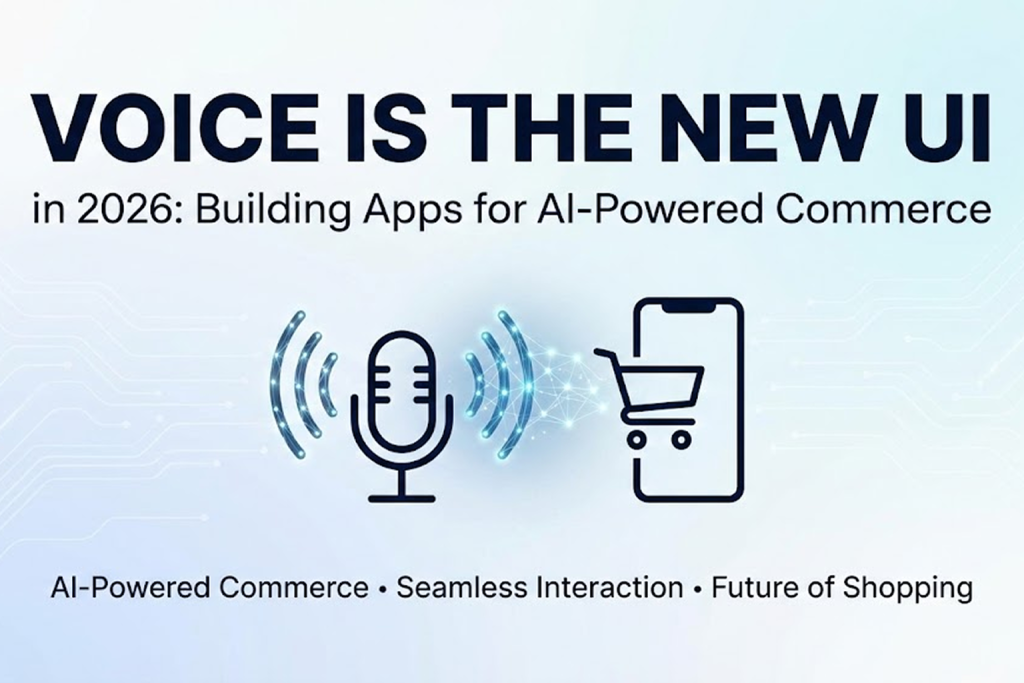
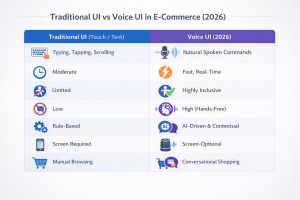
In 2026, the way people use devices and shop online has changed a lot. Touch screens and typing in search bars are no longer the main ways to interact. Now, voice is the main way people use technology. It is easier, more accessible, and more efficient.
The rise of voice UI in 2026 shows that people expect technology to be easier to use. AI, natural language processing, and speech recognition have improved so much that talking to devices feels normal and reliable. For online shopping, this means that speaking replaces clicking and typing.
In this blog, you will learn how voice interfaces are changing online shopping, why voice-first experiences are important, and how businesses can build voice-first apps for the future of digital commerce.

Why Voice UI Is Dominating in 2026
Human communication has always been rooted in speech. Long before keyboards and touchscreens existed, voice was the primary interface. Modern technology has finally caught up with this reality, allowing machines to understand, interpret, and respond to natural language with remarkable accuracy.
There are several reasons why voice UI is now essential instead of just a new feature.
1. Speed and Convenience
Speaking is much faster than typing or using menus. People can complete complex tasks by saying just one sentence instead of tapping many times.
Industry studies indicate that by 2026, more than 50% of all digital searches will be voice-based. This shift directly impacts how users discover products, compare prices, and complete purchases.
When people use voice to order online, it can take 40% less time than using regular apps. Faster shopping means more people finish their purchases and are happier with the experience.
2. Hands-Free, Screen-Free Experiences
Voice interfaces let people use technology without using their hands. You can shop while cooking, driving, exercising, or doing other things when using a screen is not possible or safe.
This change is very important in places where most people use mobile phones. Voice fits easily into daily life and makes it possible to shop at times that were not possible before.
3. Accessibility and Inclusion
Voice UI helps people who have trouble seeing, moving, or reading. Instead of dealing with complicated screens, they can just say what they need.
In 2026, making technology accessible is a must. Designing voice interfaces for everyone helps more people use your service and follows important standards.
4. Explosion of Voice-Enabled Devices
There are now many devices that use voice, like smart speakers, phones, watches, cars, TVs, and other smart gadgets.
By 2026, there are more voice assistants in use than there are people in the world. People are used to talking to technology and expect companies to offer voice options.
What Is Voice Commerce?
Voice commerce means you can search, order, pay, and manage your shopping just by speaking to a device that uses AI.
Modern voice commerce is more than just giving simple commands. Today, voice shopping uses smart AI to allow:
- Natural product discovery
- Context-aware recommendations
- Personalized reordering
- Conversational upselling and cross-selling
- Secure voice-based checkout
In short, voice commerce makes shopping feel like a conversation instead of a long process.
Market Growth and Industry Statistics
There is strong data showing that more people are using voice commerce:
- The global voice commerce market is projected to grow at a compound annual growth rate of over 20% through the next decade.
- Nearly 30% of smart speaker owners already use voice to research or purchase products.
- Over 60% of consumers say they plan to use voice shopping more frequently as AI accuracy improves.
- Enterprises that adopt voice interfaces report higher engagement, faster checkout, and improved customer retention.
These numbers show that voice commerce is not just a new idea. It is becoming an important way to shop online.
Voice User Interface Trends Shaping Commerce in 2026
It is important to know the latest trends in voice interfaces to build apps that will last.
1. Conversational AI Over Command-Based Voice
Older voice systems only worked with strict commands. Now, new systems are built for real conversations.
Users no longer say:
“Search product category shoes.”
They say:
“I need comfortable running shoes under ₹5,000.”
AI can now understand what you mean, your limits, and follow-up questions. This makes talking to devices feel more natural.
2. Context-Aware Interactions
Voice systems in 2026 remember context across interactions. They understand:
- Previous purchases
- Brand preferences
- Price sensitivity
- Location and time
This enables conversations like:
“Reorder my usual groceries” or
“Show me alternatives to the phone I bought last month.”
Remembering context is important for making voice experiences feel personal.
3. Multilingual and Localized Voice Experiences
Global markets demand voice interfaces that support multiple languages, accents, and cultural nuances.
Voice shopping platforms now support more local languages and mixed language use. This helps more people use voice to shop.
4. Agentic Voice Commerce
A big new trend is agentic commerce. Here, AI does not just answer you, it can take action on its own.
Instead of asking users for every step, voice agents can:
- Track price drops
- Refill subscriptions
- Complete routine purchases automatically
- Notify users only when confirmation is required
This is a big change from systems that only react to ones that can act for you.
Voice UX Design for E-Commerce

To design good voice experiences for online shopping, you need to think differently. Without screens, it is important to be clear, keep things simple, and build trust.
1. Designing for Conversation, Not Navigation
Voice UX should feel like talking to a helpful store worker, not like going through a menu.
This means:
- Using natural phrasing
- Asking clarifying questions when needed
- Avoiding overly long responses
- Offering suggestions rather than lists
A good voice experience should guess what the user needs and guide the conversation in a friendly way.
2. Clear Confirmation and Error Handling
Voice systems must confirm important actions, such as payments, addresses, and quantities.
For example:
“You’re ordering two packs of organic coffee for ₹899. Should I place the order?”
This helps build trust and stops expensive mistakes.
3. Progressive Disclosure
Voice UX should not give too much information at once. It is better to share details step by step.
Start with simple choices and let users ask for more details, like in a real conversation.
4. Designing for Silence and Interruptions
Voice systems should handle pauses, interruptions, and changes without problems.
Users should be able to say:
“No, not that one” or
“Wait, change the color”
without having to start over.
Building Voice-First E-Commerce Apps
To build good voice-first shopping apps, businesses need to connect technology, design, and how shopping works.
1. Start With Clear Use Cases
Not every interaction needs to be voice-enabled. High-impact use cases include:
- Search and discovery
- Reorders and subscriptions
- Order tracking
- Customer support
- Quick checkout
Begin with a small project, see if people use it, and then grow from there.
2. Invest in Strong Conversational AI
The most important part of AI voice shopping is how well it can understand and hold a conversation.
Key capabilities include:
- Natural language understanding
- Intent recognition
- Context memory
- Dialogue management
- Real-time learning
The more the AI understands people, the better the voice experience will be.
3. Integrate Deeply With Commerce Systems
Voice is only the way people interact. The real benefits come from connecting voice to systems like:
- Product catalogs
- Inventory systems
- User profiles
- Pricing engines
- Payment gateways
- Fulfillment systems
Voice commands should turn easily into real shopping actions.
4. Test With Real Users, Not Scripts
Voice systems often do not work well if they are only tested with perfect commands.
Testing should include:
- Accents and dialects
- Background noise
- Informal language
- Partial or ambiguous queries
Testing in real situations is important to make sure voice systems work well.
Enterprise Voice Commerce Solutions

Big companies need voice shopping systems that can grow and are safe to use.
Scalability and Performance
Enterprise platforms must handle:
- Millions of concurrent interactions
- Large product catalogs
- Real-time personalization
- High availability and low latency
Voice systems must be able to grow and work as reliably as regular web systems.
Security and Privacy
Voice data is sensitive. Enterprises must implement:
- Secure data storage
- Voice authentication
- Encryption
- Clear consent mechanisms
Trust is very important, especially when people are making payments.
Omnichannel Consistency
Voice systems should work smoothly with mobile apps, websites, and in-store systems.
People should be able to start talking to a voice system and then continue on another device or channel without any problems.
Real-World Applications of Voice Commerce
Many global brands already use voice commerce successfully:
- Retailers use voice for fast reorders and product discovery.
- Food brands enable hands-free ordering.
- Grocery platforms allow list building and repeat purchases.
- Customer support teams use voice AI to handle routine queries.
These examples show that voice commerce is not just being tested. It already works well.
Challenges in Voice Commerce Adoption
Even though voice commerce has many benefits, there are still some challenges:
1. Accuracy in Noisy Environments
Background noise and different accents can make it hard for systems to understand. Voice systems need to be designed to handle these problems.
2. User Trust and Privacy Concerns
People need to know that their voice data is safe and handled properly. It is important to be clear and give users control.
3. Design Complexity
Designing for voice needs new skills, like knowing how to create good conversations and understanding how people behave. It is not just like designing screens.
The Future of Voice UI Beyond 2026
In the future, voice interfaces will keep getting better:
- Voice combined with visual feedback
- Emotion-aware voice assistants
- Deeper personalization
Seamless integration with IoT and smart environments
Voice will not fully replace screens, but it will become the main way people start using many digital services.
Conclusion: Voice Is the Interface of the Future
In 2026, voice is not just an extra feature. It is the main way people use technology. As AI gets better at conversation and people want faster, easier ways to shop, voice UI is the next big change in online shopping.
Companies that build good voice shopping systems, use modern voice design, and make sure their platforms can grow will have a big advantage.
The future of shopping is about conversation. Companies that listen to their customers will succeed.
FAQs
1. What is voice commerce?
Voice commerce allows users to browse, search, and purchase products using spoken commands powered by AI and natural language processing.
2. Why is voice UI important in 2026?
Voice UI aligns with natural human behavior, offers faster interactions, improves accessibility, and supports hands-free experiences across devices.
3. Are voice-first e-commerce apps secure?
Yes, when built with proper encryption, authentication, and privacy controls, voice commerce can be as secure as traditional e-commerce.
4. What industries benefit most from voice commerce?
Retail, grocery, food delivery, healthcare, travel, and subscription-based services are most impacted by voice commerce.
5. How can enterprises adopt voice commerce effectively?
Enterprises should start with high-impact use cases, invest in conversational AI, integrate deeply with backend systems, and design for scalability and security.