January 9, 2026
The real estate world is moving faster than ever before. These days, experience and a big network aren’t enough to make your business shine. If you want to stand out in 2026, it’s time to put artificial intelligence front and center in your strategy.
AI is turning the real estate game on its head—from pricing homes and marketing listings to finding leads and showing properties. In this guide, you’ll find the top AI trends for 2026 and easy, hands-on steps to help your business grow.
The Growing Role of AI in the Real Estate Industry
AI is now part of every nook and cranny in real estate. By 2026, over 70% of real estate companies will be using AI—up from less than 35% just five years ago. What’s driving this change? Customers want more, the market never slows down, and everyone’s racing to make smarter decisions in less time.

Real estate businesses are now leveraging AI to:
- Analyze massive datasets in real time.
- Automate repetitive operational tasks.
- Predict market trends and buyer behavior.
- Deliver personalized customer experiences at scale.
AI in real estate isn’t just about taking care of the dull tasks. It gives you sharper insights, helps you make better choices, and puts your business growth into high gear.
Artificial Intelligence Real Estate Trends 2026
By 2026, AI will be the new normal in real estate. These trends are already changing the rules of the game for property businesses everywhere.
1. Hyper-Personalized Property Discovery
AI algorithms evaluate browsing behavior, location preferences, lifestyle indicators, and budget constraints to deliver tailored property recommendations. Studies indicate that personalized property search experiences increase engagement rates by up to 40% and significantly shorten buyer decision cycles.
2. Predictive Market Intelligence
AI systems now forecast pricing fluctuations, rental demand, and neighborhood growth patterns with remarkable accuracy. Predictive analytics models can improve pricing accuracy by up to 25%, reducing the risks of over- and underpricing.
3. AI-Driven Automation Across Operations
From document processing and contract analysis to customer communication and scheduling, AI automation is helping real estate businesses reduce operational costs by 30–45%.
4. Data-Backed Investment Decisions
Investors increasingly rely on AI tools to identify high-growth locations, evaluate risk, and simulate long-term returns. AI-assisted investment analysis improves ROI predictability by nearly 20% compared with classic techniques.
AI Real Estate Strategies for Sustainable Business Growth
You can’t just plug in new tools and expect magic. To get real results from AI, you need the right strategies. Here are the top ways real estate businesses are using AI to fuel growth in 2026.
AI-Powered Property Search and Recommendation Engines
Today’s buyers want a search experience that feels tailor-made. AI jumps in to connect them with the right properties by digging deep into their needs and preferences.
Benefits include:
- Higher user retention
- Increased inquiry rates
- Faster conversions
Real estate platforms that use AI-driven recommendations report 35–50% higher lead engagement than traditional listing platforms.
AI-Enhanced Virtual Tours and Immersive Experiences
Virtual property tours have gotten a major upgrade. They’re more interactive and smarter than ever.
Smart Virtual Walkthroughs
AI-powered virtual tours allow users to:
- Explore properties remotely
- Visualize different interior layouts
- Adjust lighting and design elements
This technology is a real time-saver, cutting in-person visits by up to 60% for both buyers and agents.
Behavior-Based Recommendations
As users navigate virtual tours, AI tracks their interactions and recommends similar properties in real time, increasing cross-listing exposure and upsell opportunities.
AI Real Estate Lead Generation Tips That Actually Work
Hunting down quality leads is still one of real estate’s biggest headaches. AI takes the pain out of the process by making it easier to capture, qualify, and follow up with leads.
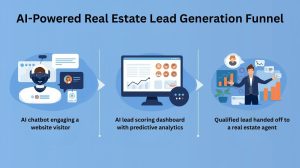
1. AI Chatbots for 24/7 Engagement
AI chatbots respond instantly to inquiries, qualify prospects, and schedule appointments. Real estate businesses using AI chatbots report:
- 40% higher lead capture rates
- 50% faster response times
2. Predictive Lead Scoring
AI models assess user interactions, engagement history, and demographic data to identify high-intent leads. Predictive scoring increases sales efficiency by up to 35%, allowing agents to focus on prospects most likely to convert.
3. Automated Follow-Ups
AI-driven communication systems send timely follow-ups through email, SMS, or messaging platforms, improving lead nurturing consistency and reducing manual workload.
AI Real Estate Marketing Strategies 2026
Marketing is speeding ahead thanks to AI. In 2026, the best real estate marketing strategies use AI to target smarter, personalize more, and deliver results you can see.
AI-Generated Property Content
AI tools now generate:
- SEO-optimized property descriptions
- Personalized email campaigns
- Social media posts tailored to buyer personas
Real estate businesses using AI content tools see up to 45% more engagement.
Smart Advertising and Campaign Optimization
AI keeps a sharp eye on your ads and fine-tunes your campaigns as they run. The result? You spend 20% to 30% less to win new customers and watch your ROI climb.
Hyper-Personalized Email Marketing
AI helps you send the right message to the right person at just the right moment. Personalized emails can deliver two to three times more conversions than the usual generic blasts.
Real-Time Pricing and Market Analysis Using AI
Pricing remains one of the most critical success factors in real estate. AI transforms pricing strategies by continuously analyzing:
- Comparable sales
- Market demand
- Economic indicators
- Buyer behavior patterns

AI-powered pricing tools keep your listings fresh and current, helping you sell up to 25% faster and boost your returns.
AI in Property Management and Tenant Experience
AI is shaking up how property managers and tenants communicate, solve problems, and handle day-to-day tasks.
Predictive Maintenance
AI analyzes sensor data and maintenance records to predict equipment failures before they occur. Predictive maintenance reduces repair costs by up to 30% and improves occupant satisfaction.
Automated Tenant Communication
AI handles rent reminders, maintenance requests, and all those everyday questions, freeing up property managers to focus on what really matters.
Intelligent Tenant Screening
AI sorts through tenant applications to help you spot reliable renters, lower default risks, and keep your properties filled.
AI-Driven Investment Analysis and Portfolio Optimization
If you’re investing in real estate, AI gives you insights you just can’t find anywhere else.
Predictive ROI Modeling
AI simulates multiple investment scenarios to forecast rental income, appreciation, and market risks.
Emerging Market Identification
Through analyzing demographic shifts, infrastructure development, and economic indicators, AI identifies high-potential markets before they peak.
Investors who use AI analytics see their portfolios perform 15–25% better than those using traditional methods.
Overcoming Challenges in AI Adoption
Despite its advantages, AI adoption comes with challenges:
Data Quality and Integration
AI works best with clean, organized data. Keep your data tidy to get the most out of your AI tools.
Skill Gaps
You need the right skills to use AI. Train your team and team up with trusted technology partners to get started.
Change Management
Bringing AI into your business means changing how your team works. When your leadership, processes, and technology all move together, you’ll see results faster.
AI Adoption Roadmap for Real Estate Businesses
To successfully implement AI, real estate businesses should follow a structured approach:
- Assess existing workflows and pain points
- Centralize and clean data sources
- Start with high-impact AI use cases (lead generation, marketing, pricing)
- Measure performance metrics and ROI
- Scale AI adoption across operations
- Rolling out AI step by step helps you see results sooner and keeps disruption low.
Future of AI in Real Estate Business Growth
By 2026, AI won’t just be a nice extra. It will be a must. Property businesses that jump in early will enjoy:
- Higher process efficiency
- Better customer experiences
- Stronger brand positioning
- Sustainable, data-driven growth
AI in real estate isn’t here to replace your expertise. It’s here to help you work smarter and give your clients a personal touch. The businesses that stand out will be the ones that blend human know-how with smart technology.
Conclusion
As we move into 2026, AI is the engine powering real estate growth. Whether it’s finding the perfect property, generating leads, setting prices, or managing properties, AI is changing the game for real estate businesses everywhere.
Real estate companies that use AI get faster insights, better leads, and smoother operations. Most importantly, AI helps you make smart, data-driven decisions so you can solve problems before they grow.
The real estate businesses that succeed will be the ones that mix human expertise with smart automation. By choosing the right AI strategies now, you can build a stronger, more competitive business ready for the digital future.
Frequently Asked Questions (FAQs)
1. How is AI transforming the real estate industry in 2026?
AI is transforming real estate by automating workflows, improving property search personalization, enhancing lead generation, optimizing pricing, and enabling predictive market analysis. By 2026, AI is deeply embedded across sales, marketing, investment analysis, and property management functions.
2. What are the key Artificial Intelligence real estate trends for 2026?
Major trends include hyper-personalized property recommendations, AI-powered virtual tours, predictive pricing models, automated lead scoring, intelligent marketing automation, and AI-driven investment forecasting.
3. How does AI help with real estate business growth?
AI improves business growth by increasing lead quality, cutting down operational costs, improving marketing ROI, accelerating deal closures, and providing data-driven insights for informed decision-making. Businesses using AI report higher conversion rates and stronger long-term scalability.
4. What are the best AI real estate marketing strategies for 2026?
Effective strategies include AI-generated property content, smart ad targeting, real-time campaign optimization, personalized email marketing, and predictive customer segmentation. These approaches improve engagement and reduce customer acquisition costs.
5. Can AI improve real estate lead generation?
Yes. AI-powered chatbots, predictive lead scoring, and automated follow-ups significantly improve lead capture and qualification. These tools help agents focus on high-intent prospects and close deals faster.
6. Is AI suitable for small and mid-sized real estate businesses?
Absolutely. Many AI tools are scalable and cost-effective, allowing small and mid-sized firms to automate processes, enhance customer experience, and compete with larger enterprises without heavy infrastructure investments.
7. What challenges do real estate businesses face when adopting AI?
Common challenges include data quality issues, integration with existing systems, skill gaps, and change management. However, a phased adoption strategy and the right technology partners can minimize these barriers.
8. Will AI replace real estate agents in the future?
No. AI enhances human capabilities rather than replacing agents. It handles data analysis, automation, and insights, while agents focus on relationship-building, negotiation, and personalized service.